Dev Blog – System Architecture Direction
Today I focused on defining the high level simulation architecture rather than working on visual design or implementation details. One of the biggest challenges with a project like this is avoiding premature technical decisions, so I shifted toward mapping the system conceptually instead of programmatically. The goal was to understand how the simulation functions as an ecosystem of interacting systems rather than as isolated features or mechanics.
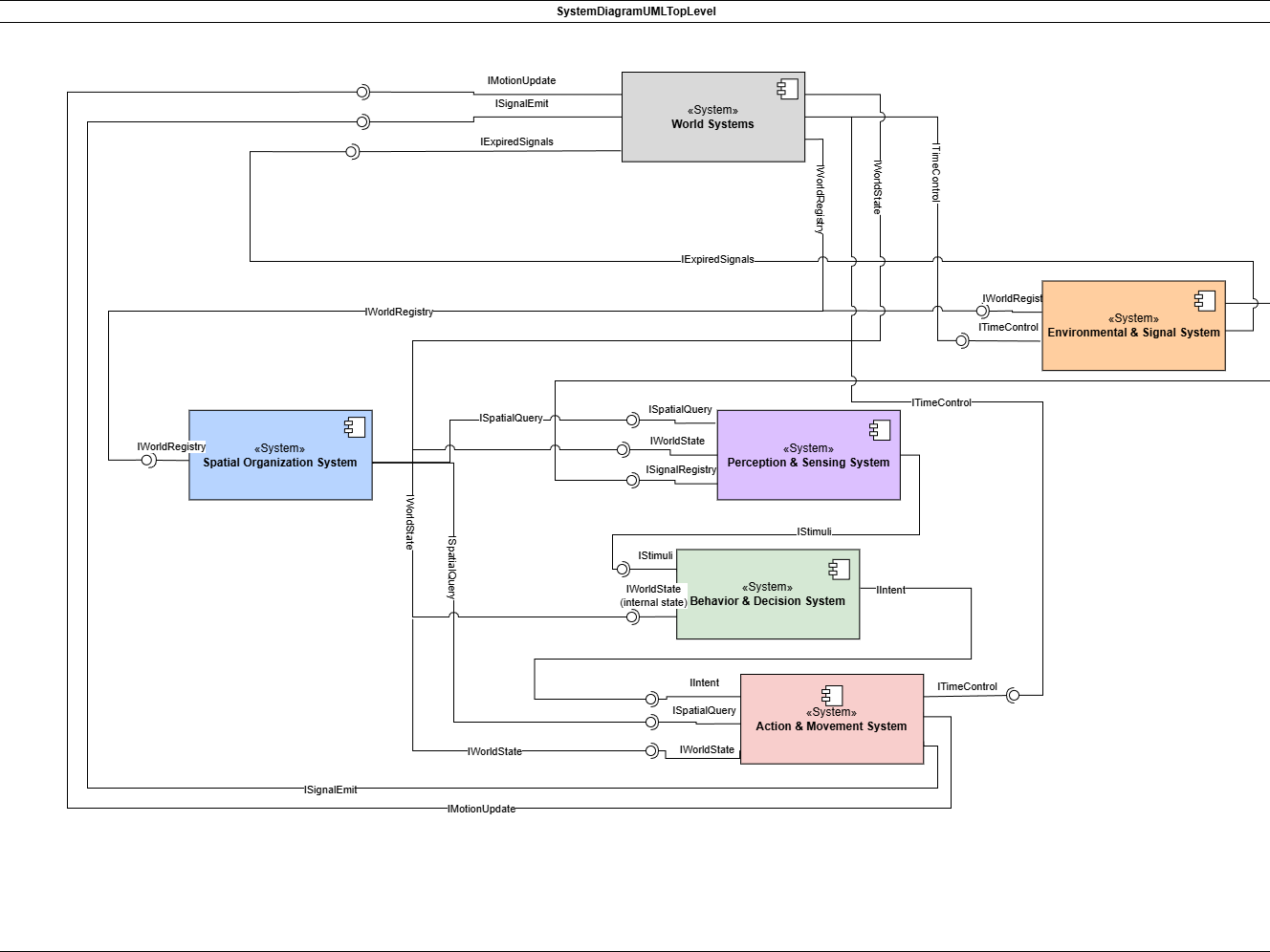
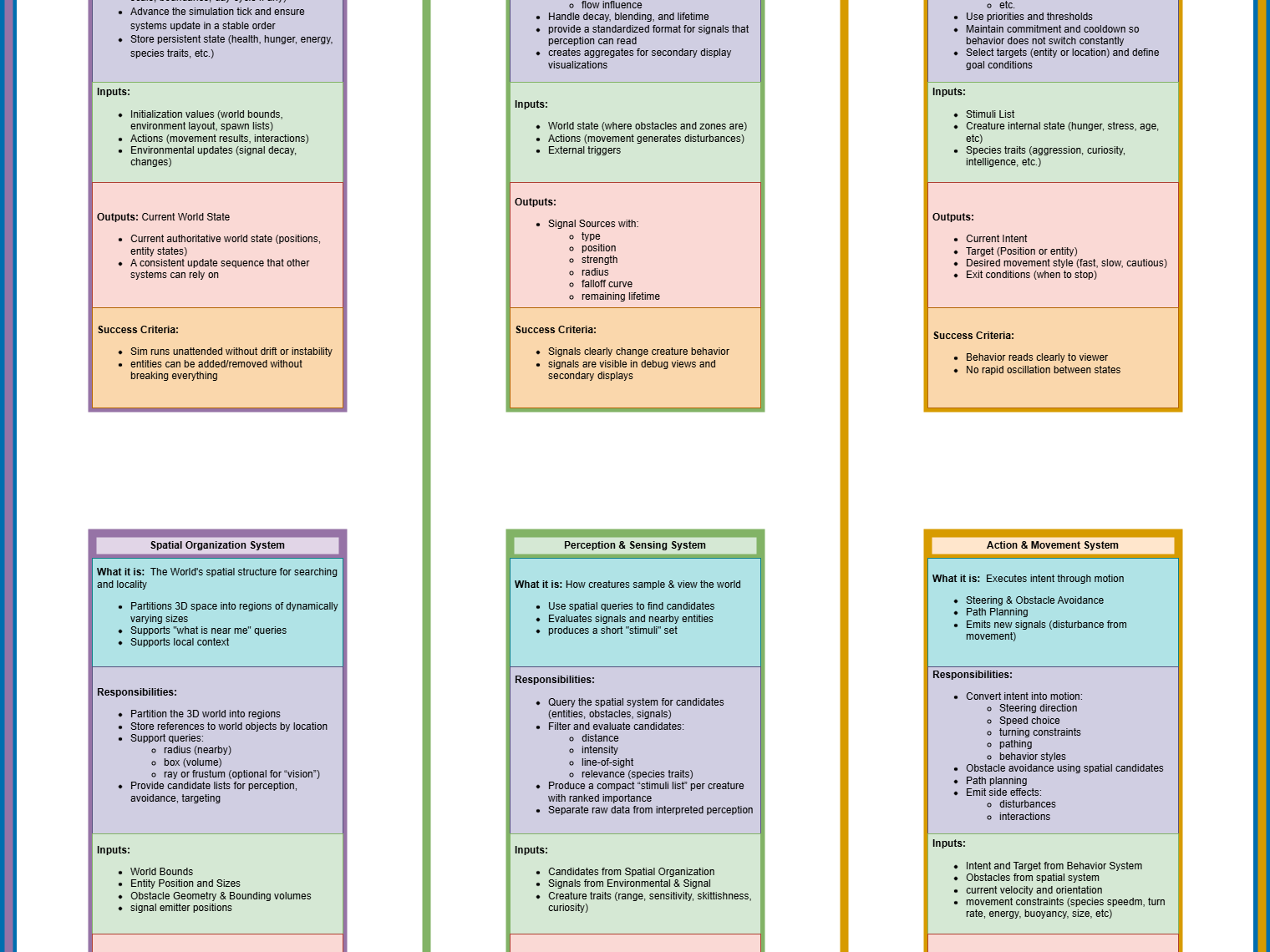
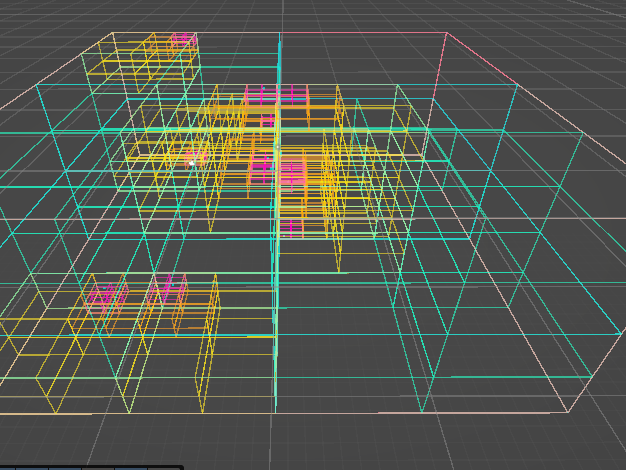
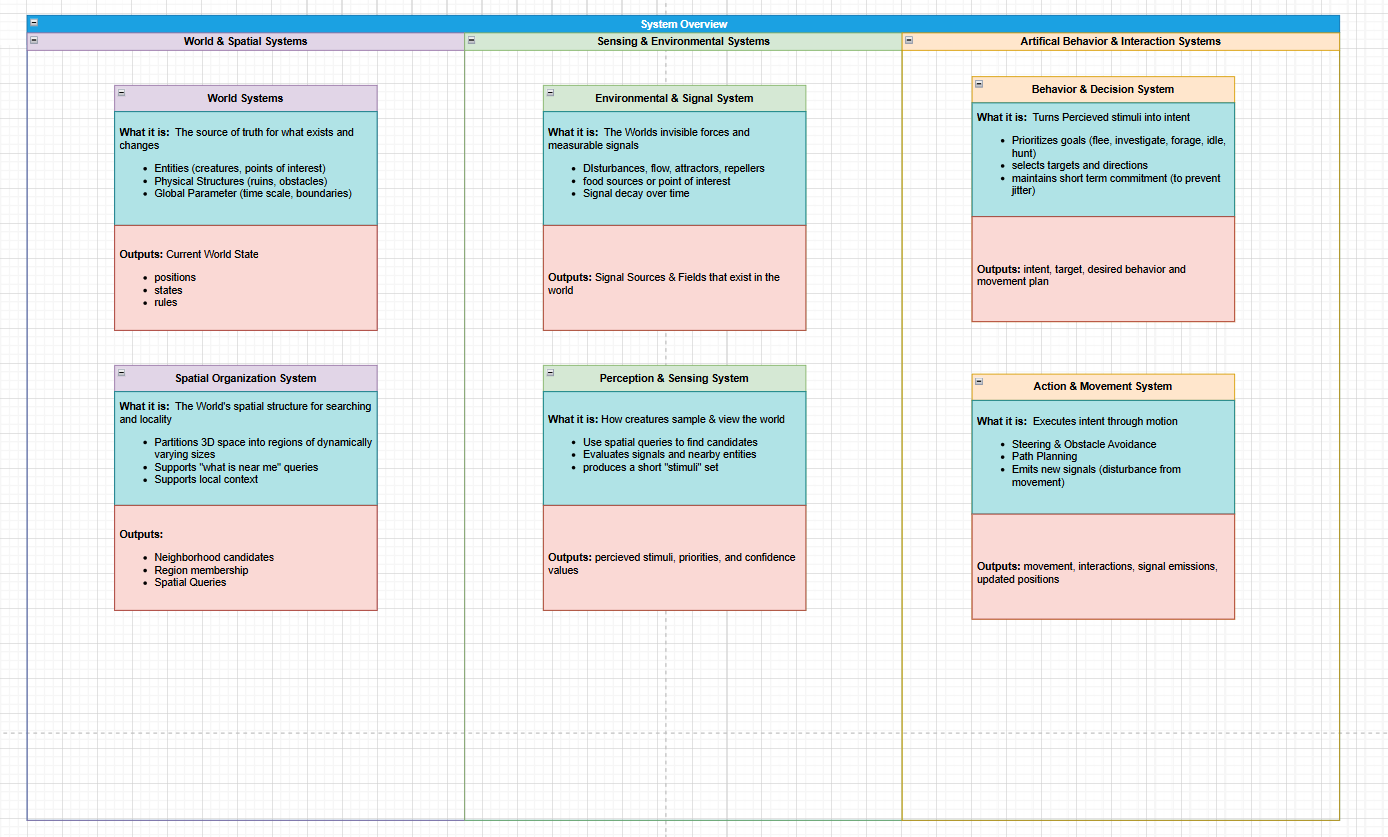
I settled on organizing the simulation into six core systems: World Systems, Spatial Organization System, Environmental & Signal System, Perception & Sensing System, Behavior & Decision System, and Action & Movement System. This structure allows me to separate responsibilities clearly, particularly between world state, spatial logic, perception, and behavior. The Spatial Organization System, which will likely be implemented using an octree, acts as a foundational layer that supports efficient searching, locality awareness, and interaction queries across the entire simulation.
This breakdown helps stabilize the project direction by clarifying what the simulation actually needs to do at a systems level. Instead of thinking in terms of features, I am framing the ecosystem in terms of information flow: the world generates signals, creatures perceive those signals, decisions form intent, and actions feed changes back into the world. Establishing this structure early should reduce complexity later and make it easier to scale behaviors, sensing models, and environmental influences.
Moving forward, the next step is translating this conceptual model into a minimal prototype, starting with the Spatial Organization System and basic perception queries.