The Ocean Machine
Hybrid physical / digital aquarium installation
Capstone Project, 2026
Alexander Rupp
Game Design BA, Studio Art Minor
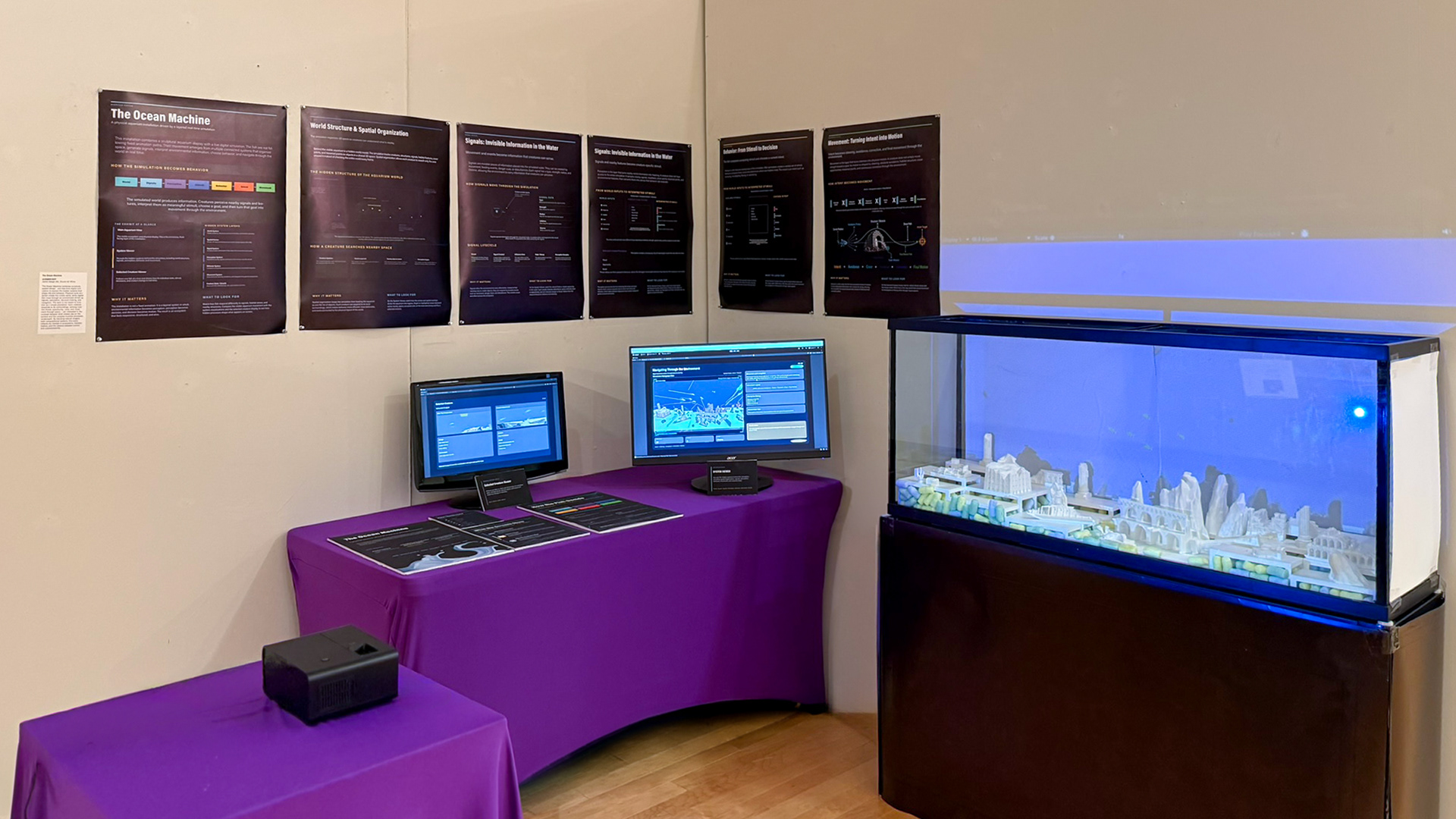
Full installation view — The completed capstone display includes the physical aquarium, projection based simulation, secondary system displays, printed graphics, and explanatory wall materials.
The Ocean Machine is a hybrid physical and digital installation where a real aquarium tank becomes the boundary for a simulated ocean ecosystem. Physical ruins and terrain create the visible world, while digital fish move through an environment driven by signals, perception, decision-making, and navigation.
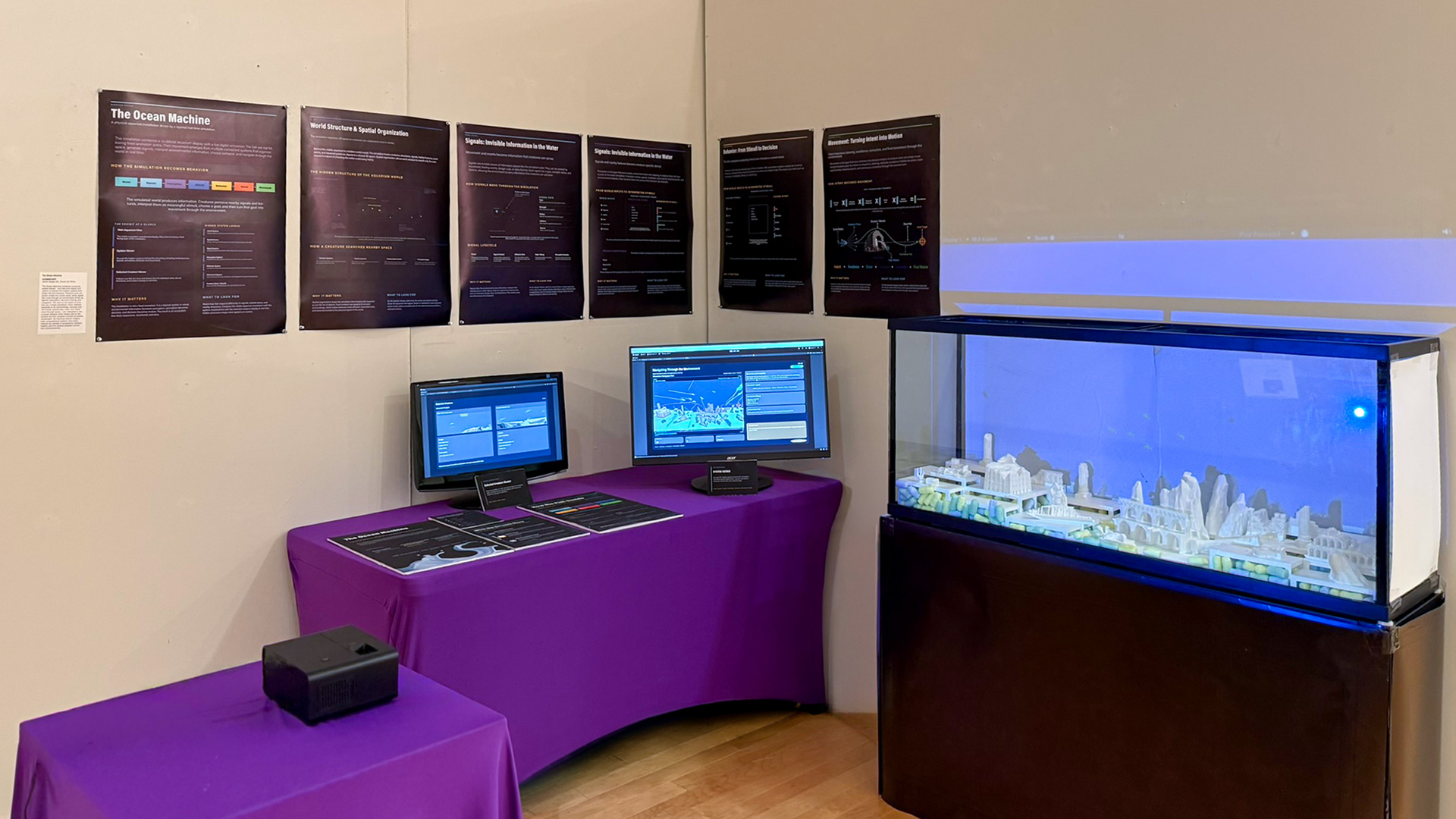
Full installation view — The completed capstone display with physical aquarium, projected simulation, secondary monitors, table graphics, and wall posters.
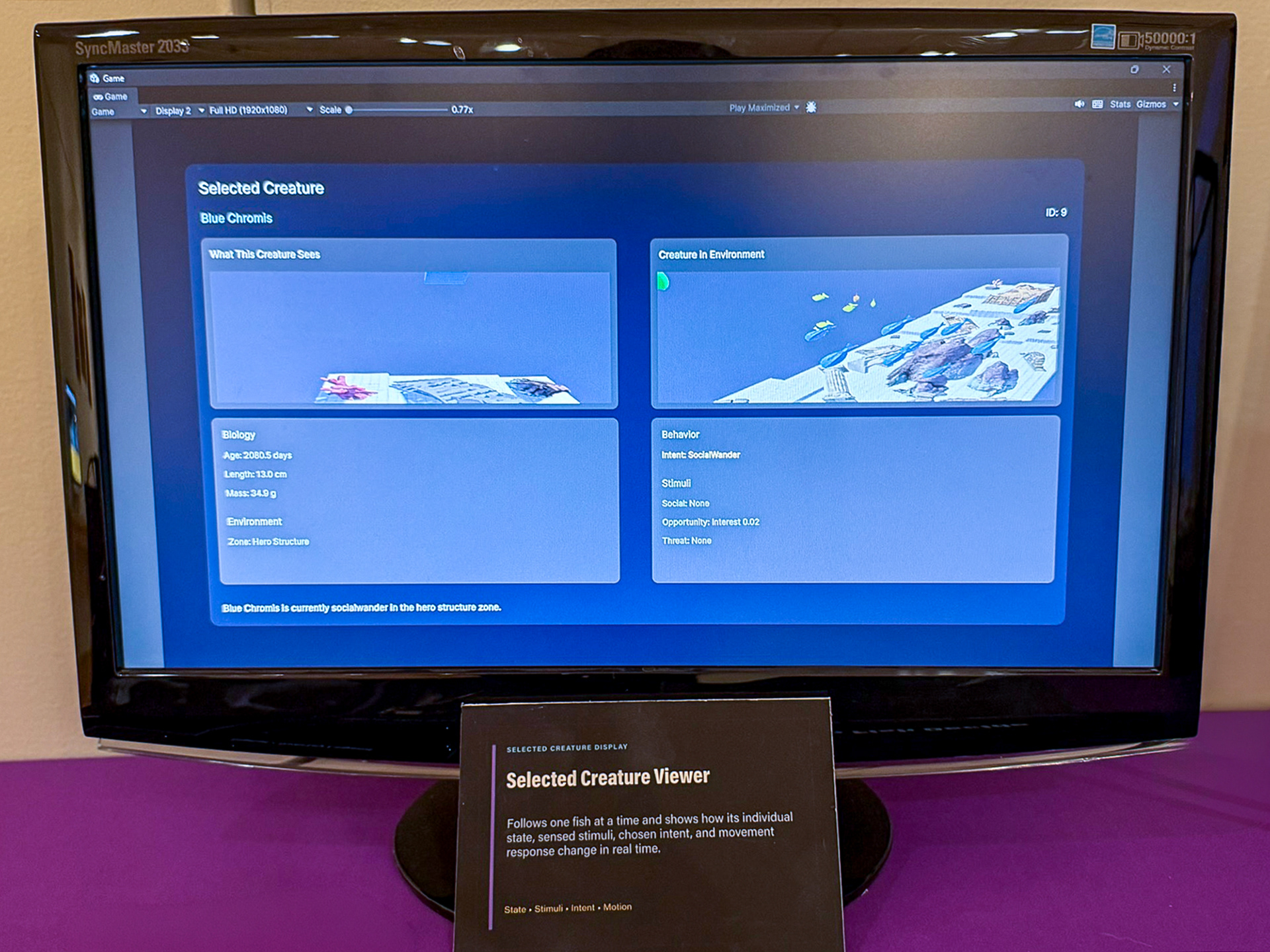
Secondary display setup — Screens reveal system data and selected creature information.
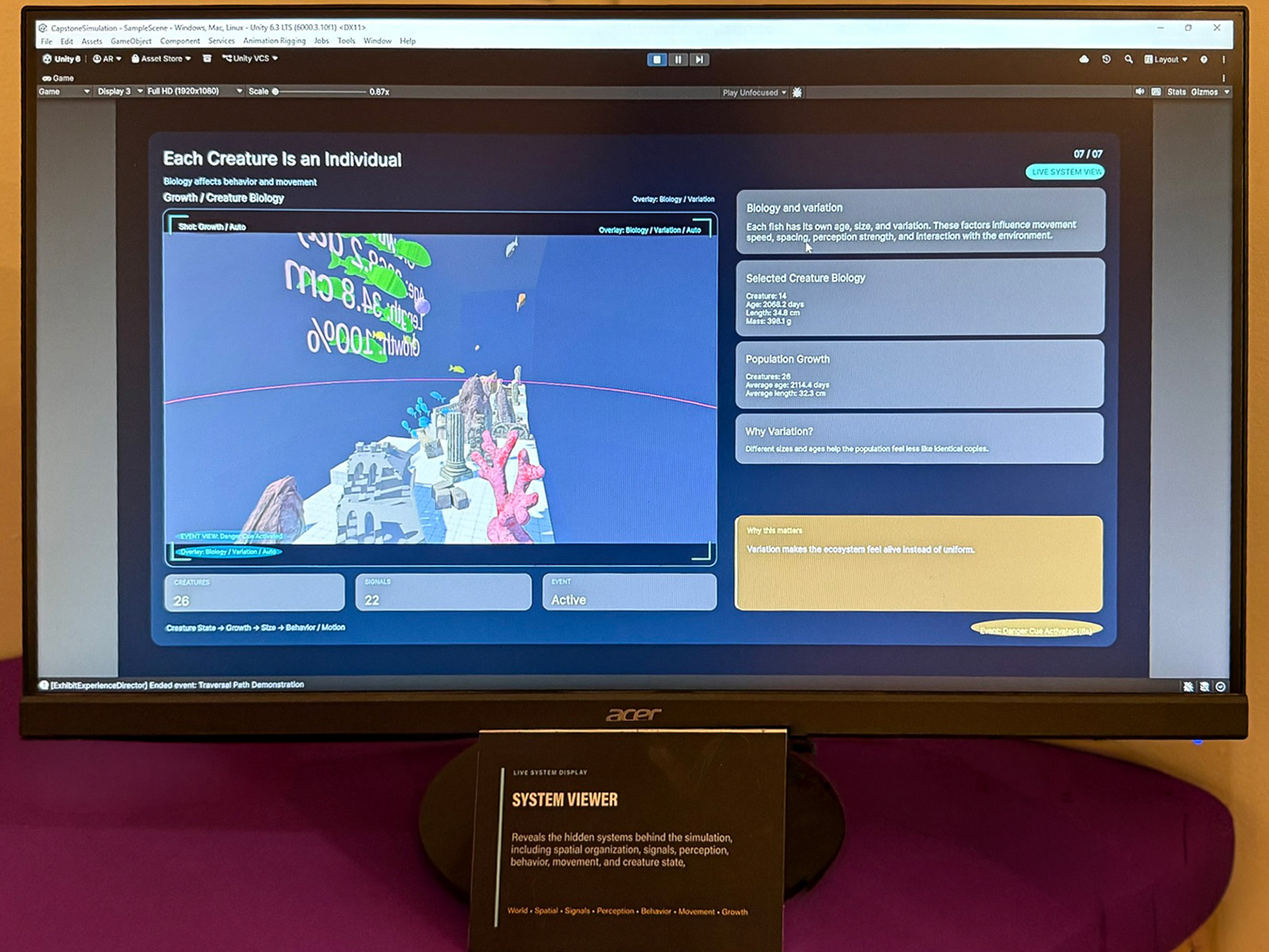
Secondary display setup — Screens reveal system data, sensory views
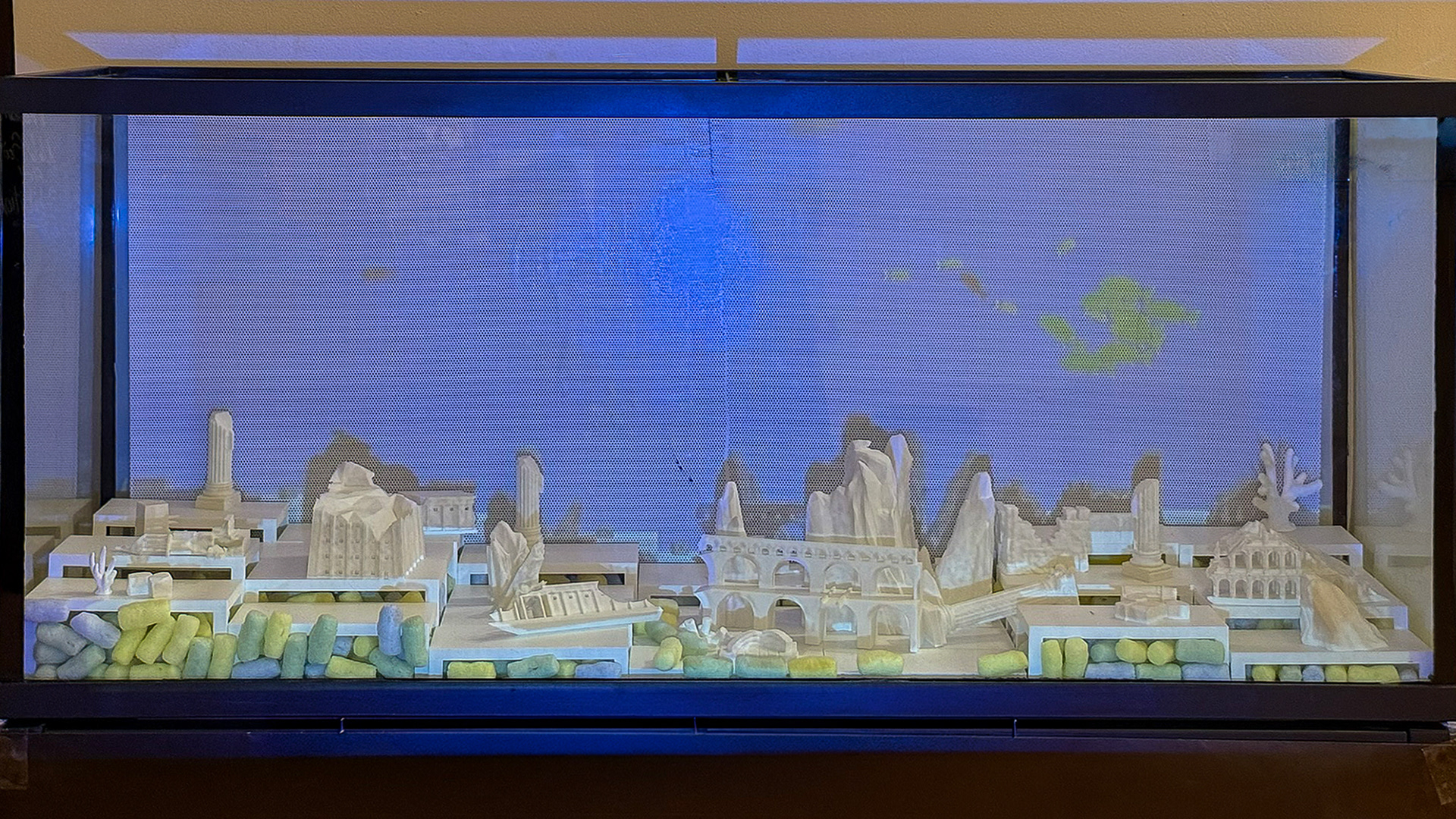
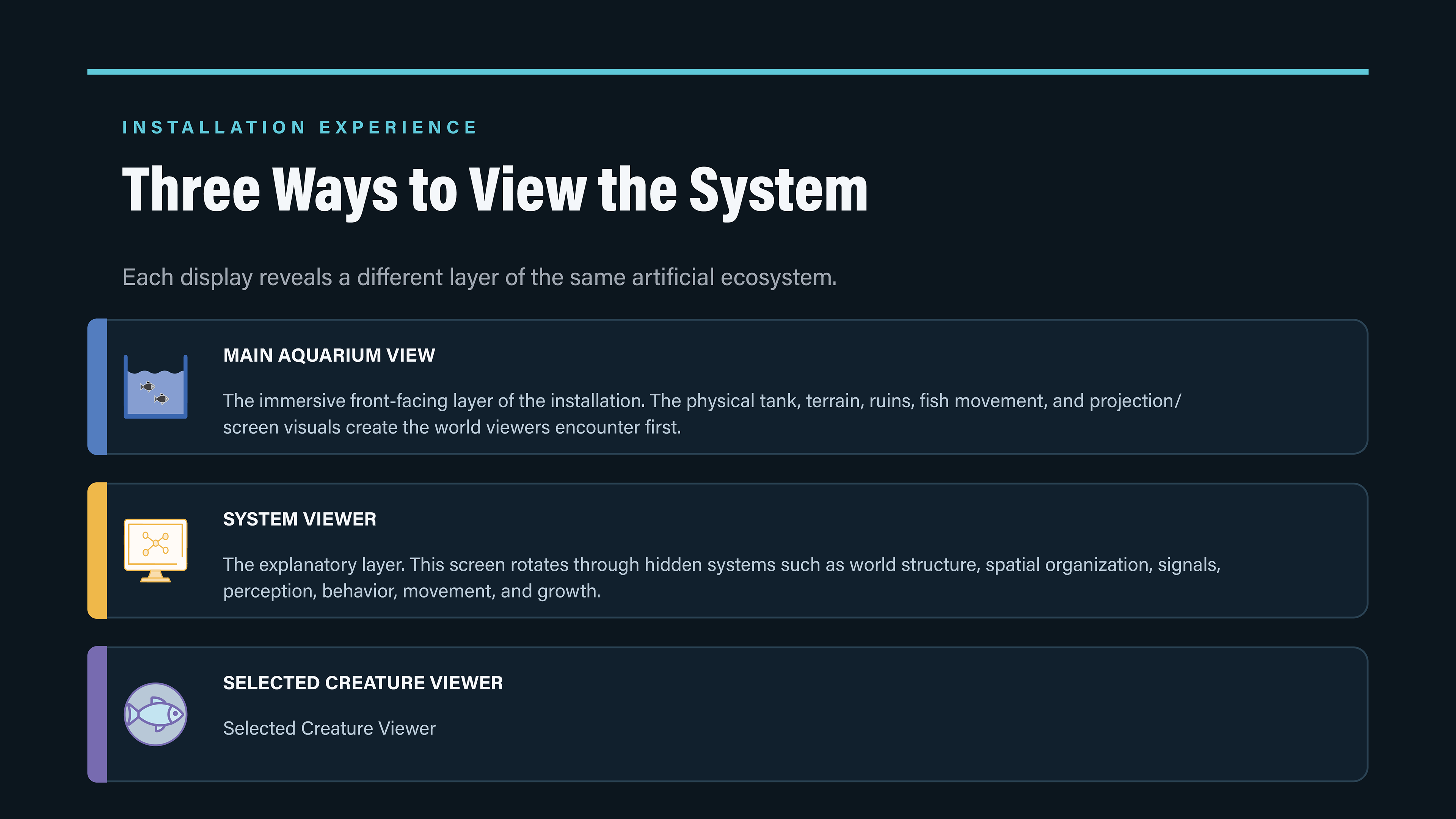
Main aquarium view — The tank acts as the physical boundary between viewer and simulated ecosystem.
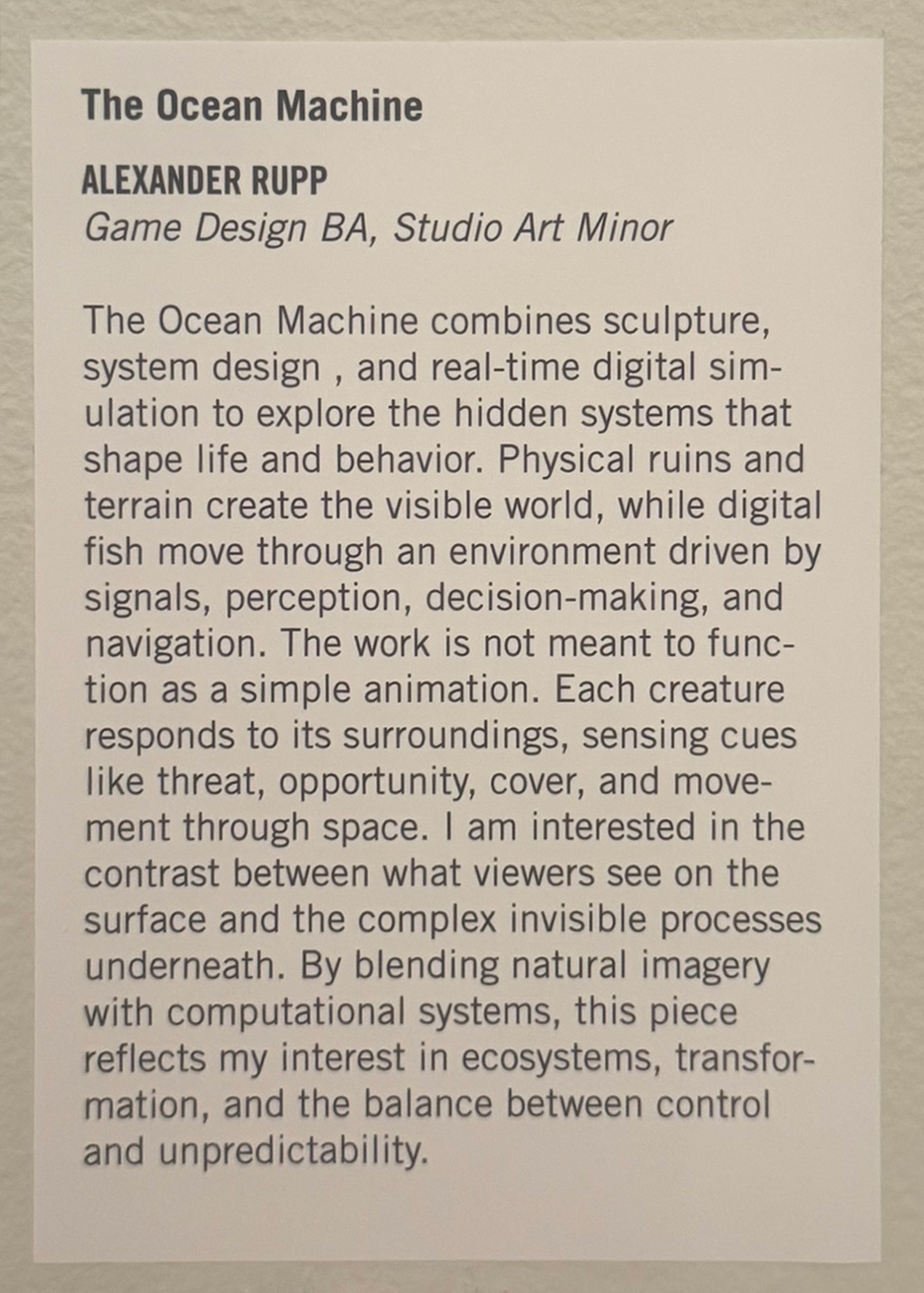
Wall label — Exhibition label with title, artist information, and artist statement.
How the Simulation Works
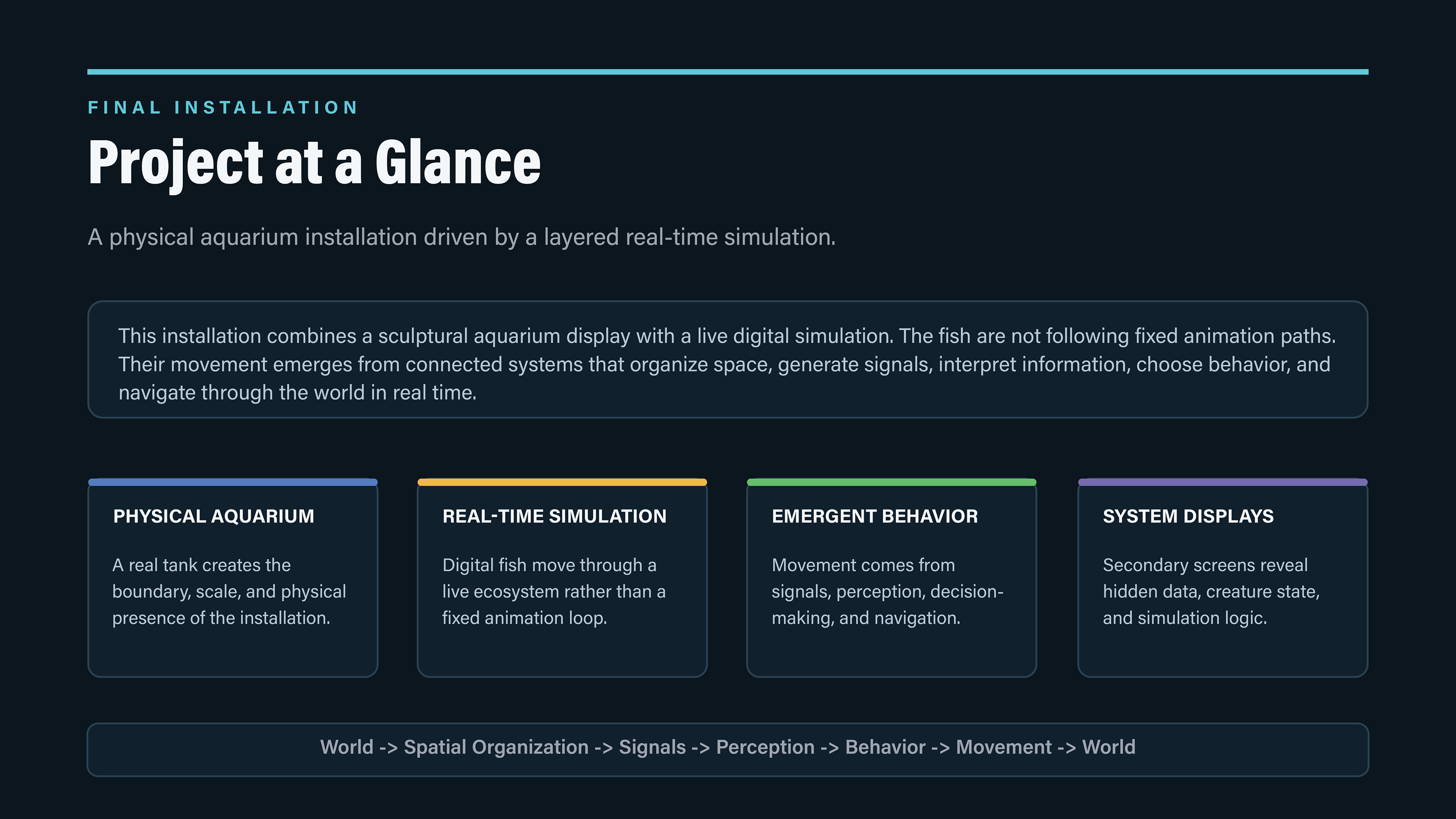
The fish are not following fixed animation paths. Their movement emerges from a chain of connected systems. The environment produces signals, perception interprets what matters, behavior chooses a goal, intent defines the current action, and movement turns that goal into visible motion.
What viewers see as fish movement is the final result of invisible information moving through the simulated world.
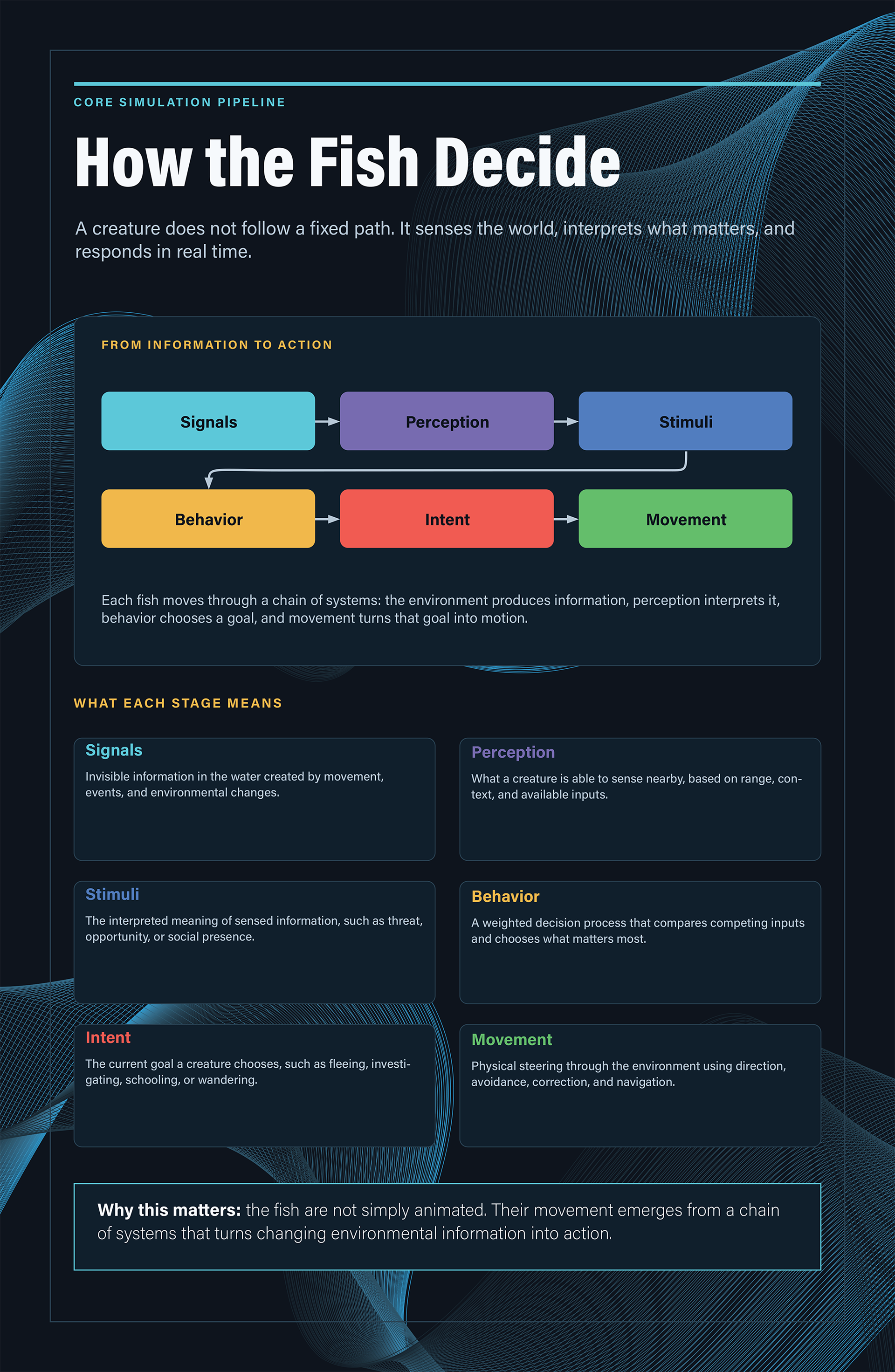
Core simulation pipeline — Environmental information becomes perception, perception becomes decision-making, and decision-making becomes motion.
The Systems Beneath the Surface
Beneath the visual surface of the aquarium is a custom simulation framework. The system is divided into layers that organize the world, track spatial information, emit environmental signals, interpret sensory input, choose behavior, and move creatures through the environment. Each layer has its own role, but the ecosystem becomes believable through the way those layers connect.
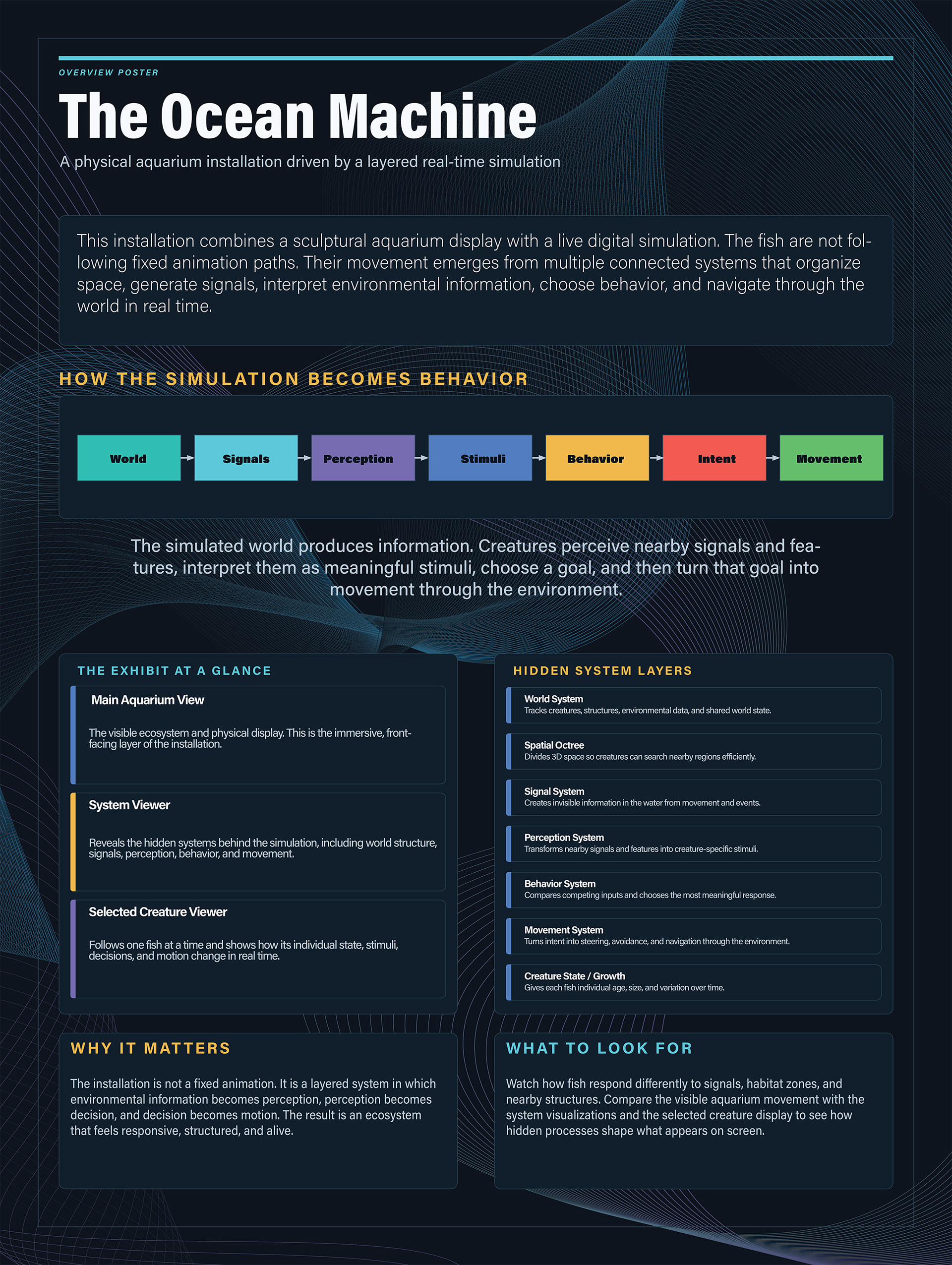
Overview Poster — Summary of the exhibit layers, behavior pipeline, hidden systems, and what viewers should look for.
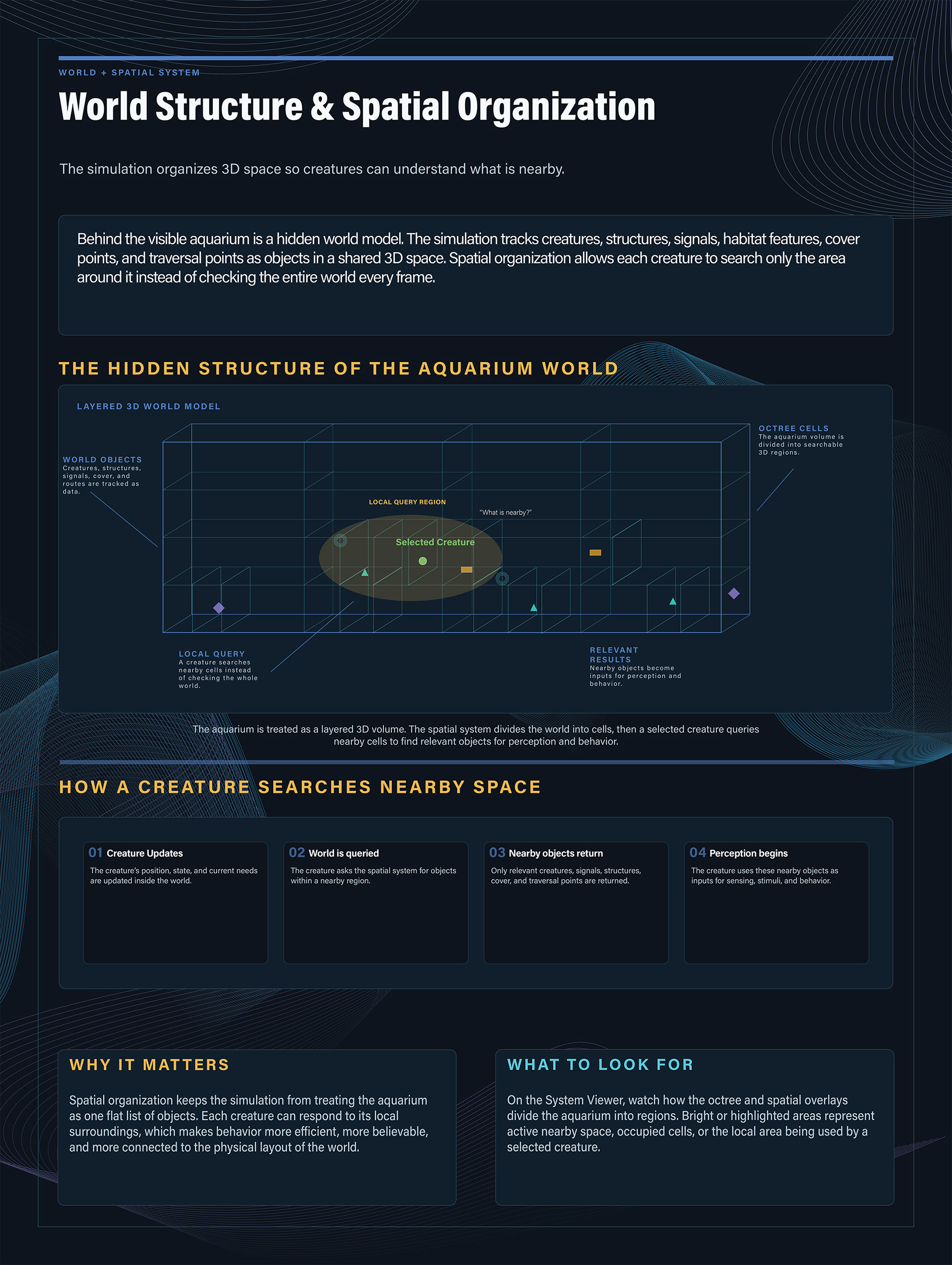
World + Spatial System — The simulation treats the aquarium as a layered 3D volume and uses spatial organization so creatures can query nearby objects efficiently.
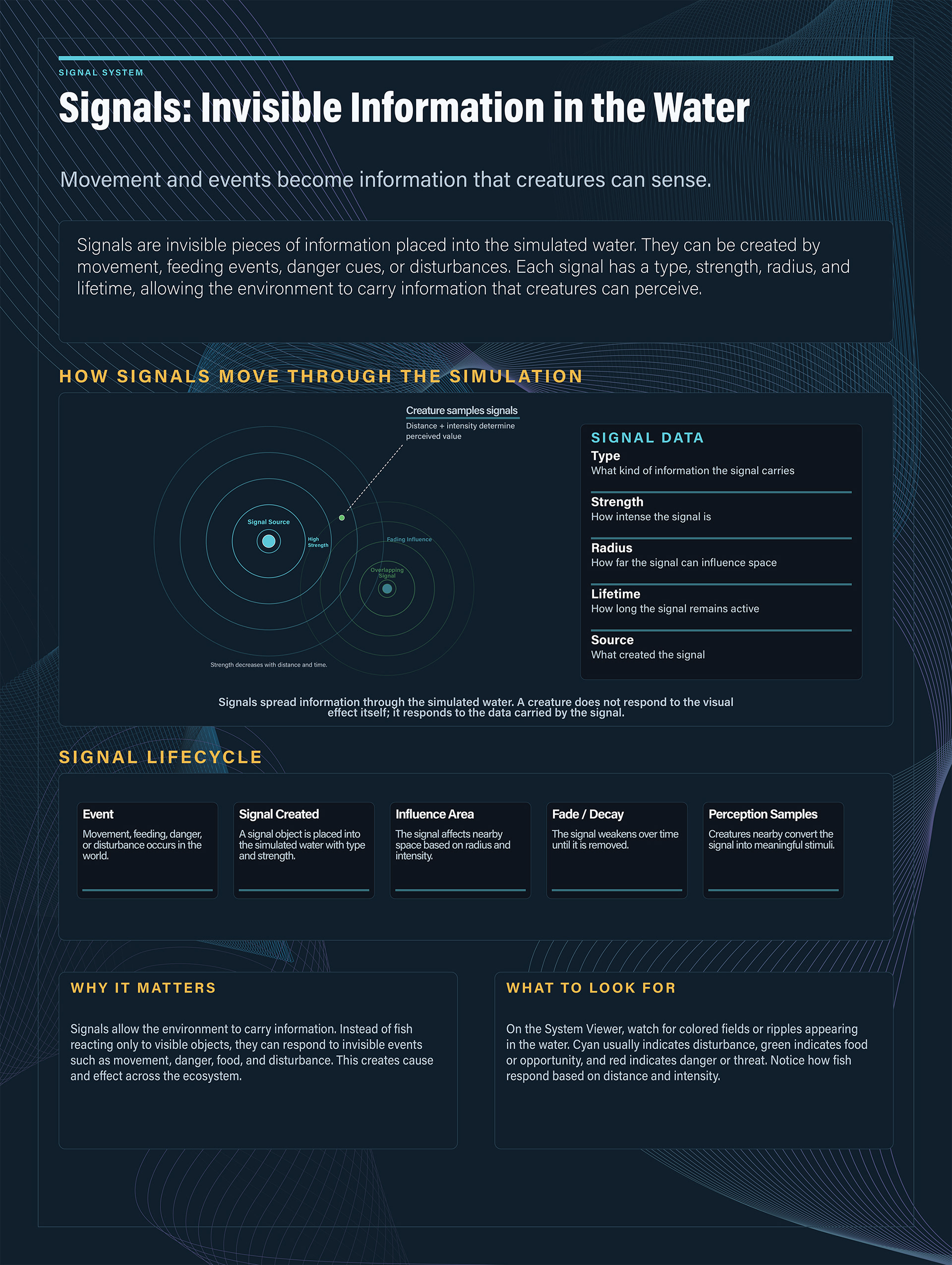
Signal System — Movement and events create invisible information in the water through signals with type, strength, radius, lifetime, and source.
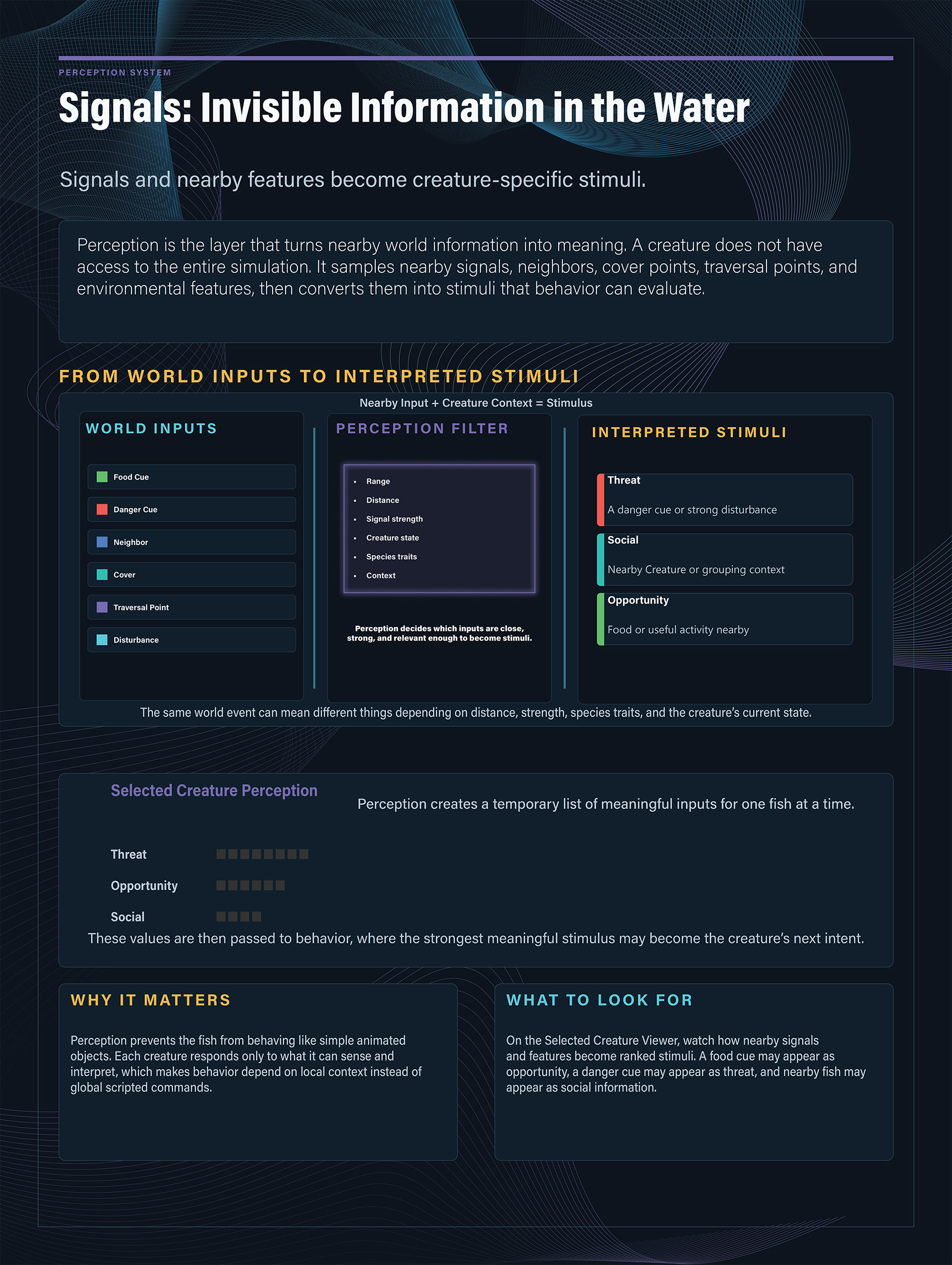
Perception System — Nearby signals and features become creature-specific stimuli based on range, distance, strength, state, traits, and context.
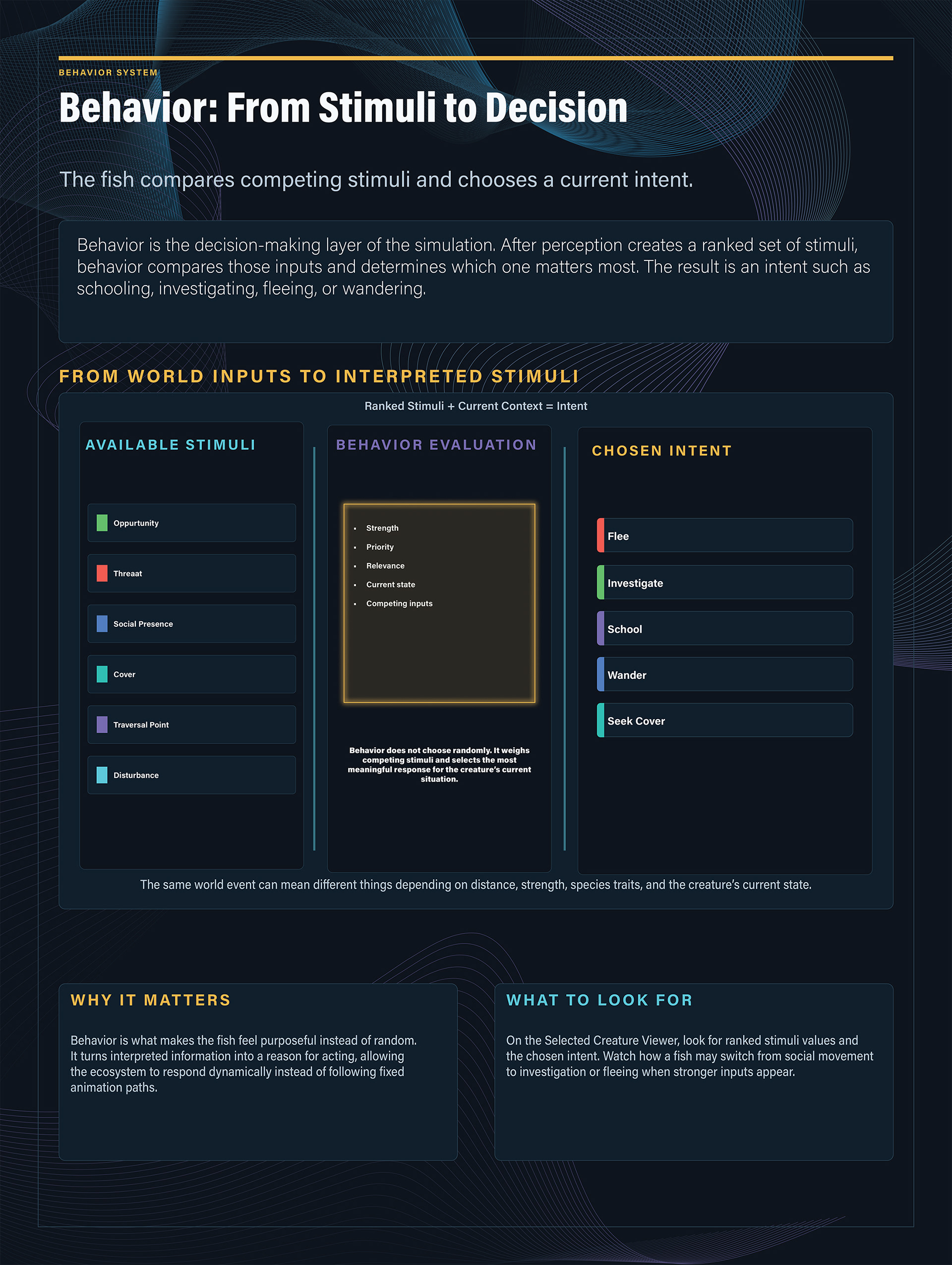
Behavior System — Ranked stimuli are compared against current context to choose intent, such as fleeing, investigating, schooling, wandering, or seeking cover.
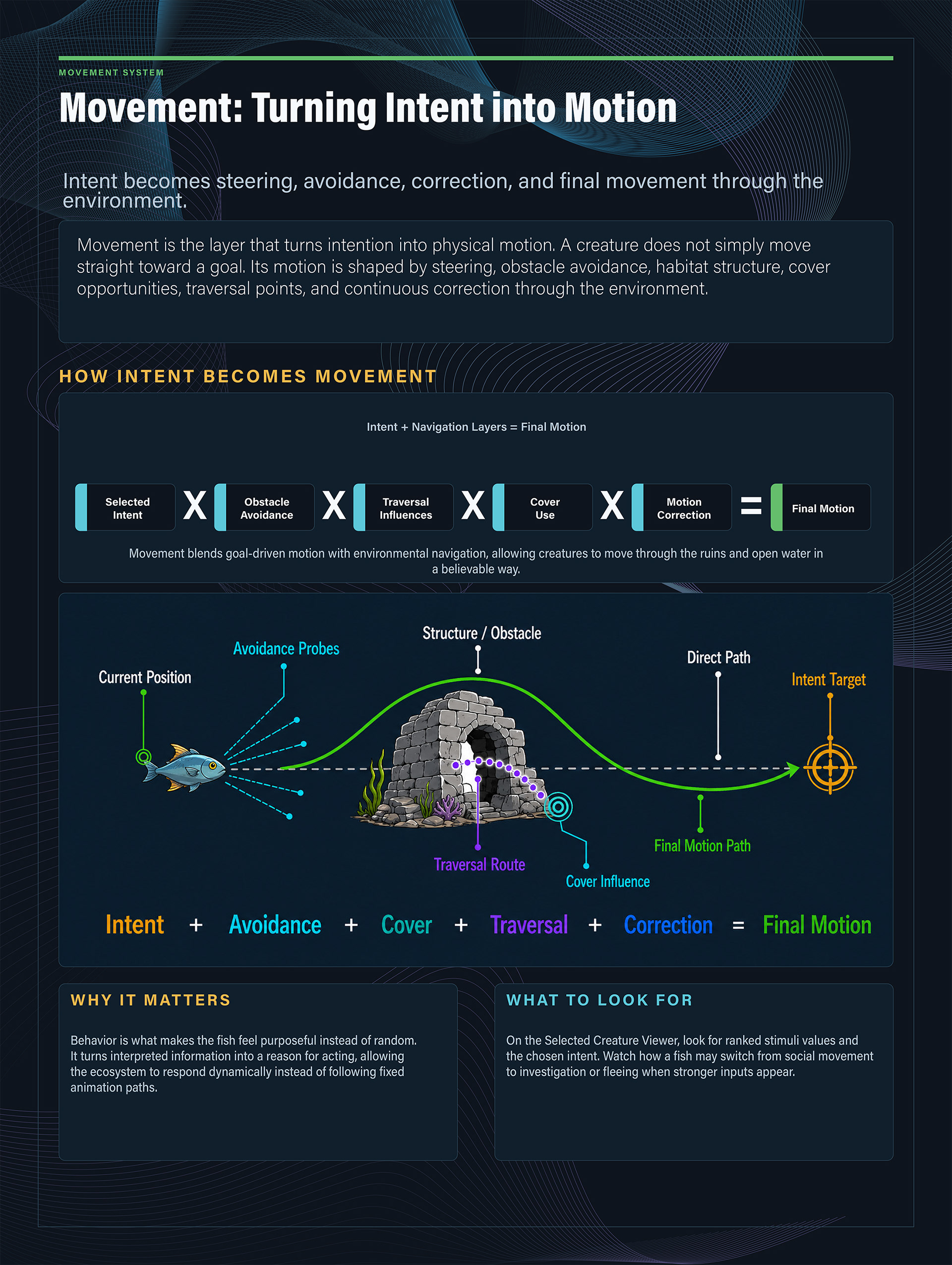
Movement System — Intent becomes final motion through steering, obstacle avoidance, traversal influences, cover use, and correction.
Reflection
Completing The Ocean Machine taught me how much installation work depends on the relationship between concept, technology, and physical space. The project was not only about building a simulation, but about making that simulation understandable in a gallery setting. Every screen, poster, label, artifact, and display decision had to support the same central idea: a world that feels alive because hidden systems are constantly shaping what viewers see.
The most successful part of the installation was the way the physical and digital components supported each other. The aquarium made the simulated ecosystem feel contained and observable, while the digital systems gave the tank behavior, motion, and change over time. If I continue developing the project, I would expand the ecosystem with more species, deeper environmental interactions, and a more refined relationship between projection, screen placement, and physical space.
Explore The Process
This final page documents the completed installation. The original proposal and devblog remain available as an archive of how the project developed from concept to installed work.